


Several years too late, I realised I’d been buying my melons like a tourist. In other words, badly. Very badly. When I lived in Ouarzazate, melons were extremely rare. It was when I went to El Jadida, and then Casablanca, that I found them in abundance. But not the cantaloupe of my childhood.
I still remember my first full season in El Jadida, when I’d point at the stalls at the Saturday morning market, stammering ‘that, the yellow melon’ with the confidence of someone who doesn’t know what she’s saying. The vendor would look at me sympathetically and hand me a melon. I’d go home, cut it open, have a taste… and think to myself that Moroccan melon was ‘nice, but nothing special’. Let’s get this straight once and for all: it really is the worst idea you could possibly have.
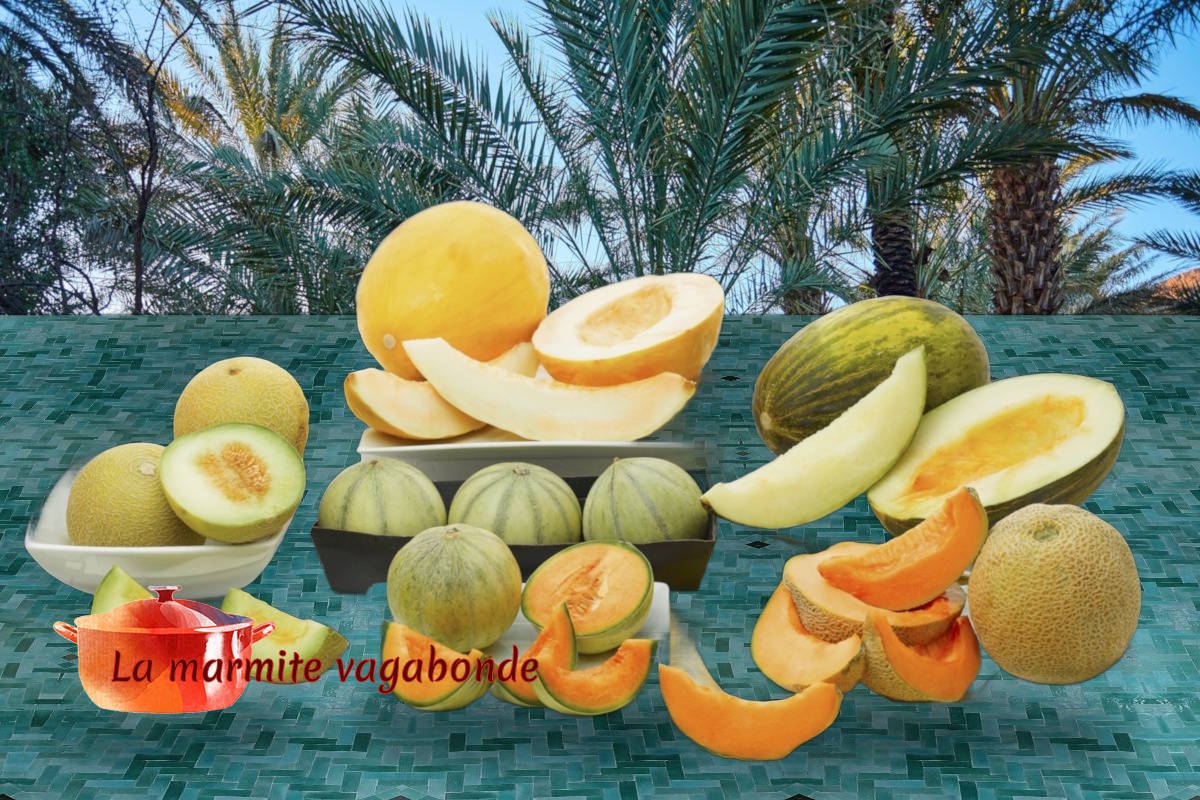
Melons aren’t just ‘okay, but nothing special’. It was me who was ‘okay, but nothing special’ in the way I chose them. And above all, it was me who was getting everything mixed up. Because in Morocco, you don’t just find ‘the melon’. You find melons. Several of them. Distinct varieties. Each with its own name, history, season and uses. And if you believe, as I did for a long time, that yellow melons and cantaloupe melons are just variations of the same thing, it’s time we had a little chat.
The melon, that summer fruit that has travelled the world
For once, this is a plant native to Africa — more specifically, tropical Africa. In fact, wild melons can be found in the Moroccan desert(they’re very bitter!). It was already being cultivated in Egypt in the 3rd millennium BC. From there, it spread throughout the Mediterranean basin and into Asia. Its name comes from the Greek ‘mêlopepôn’, which means ‘sun-ripened apple’ (squash).
The melon — Cucumis melo to botanists, kharbouza (خربوزة) in Darija to the man in the street — originates from tropical Africa. The Greeks deified it somewhat (Demeter and her story about pomegranate seeds aside, the Greek gods clearly had a taste for sweet fruit). The Romans popularised it throughout the Mediterranean.
In ancient times, melons were small, about the size of a quince. They subsequently grew larger through plant breeding.
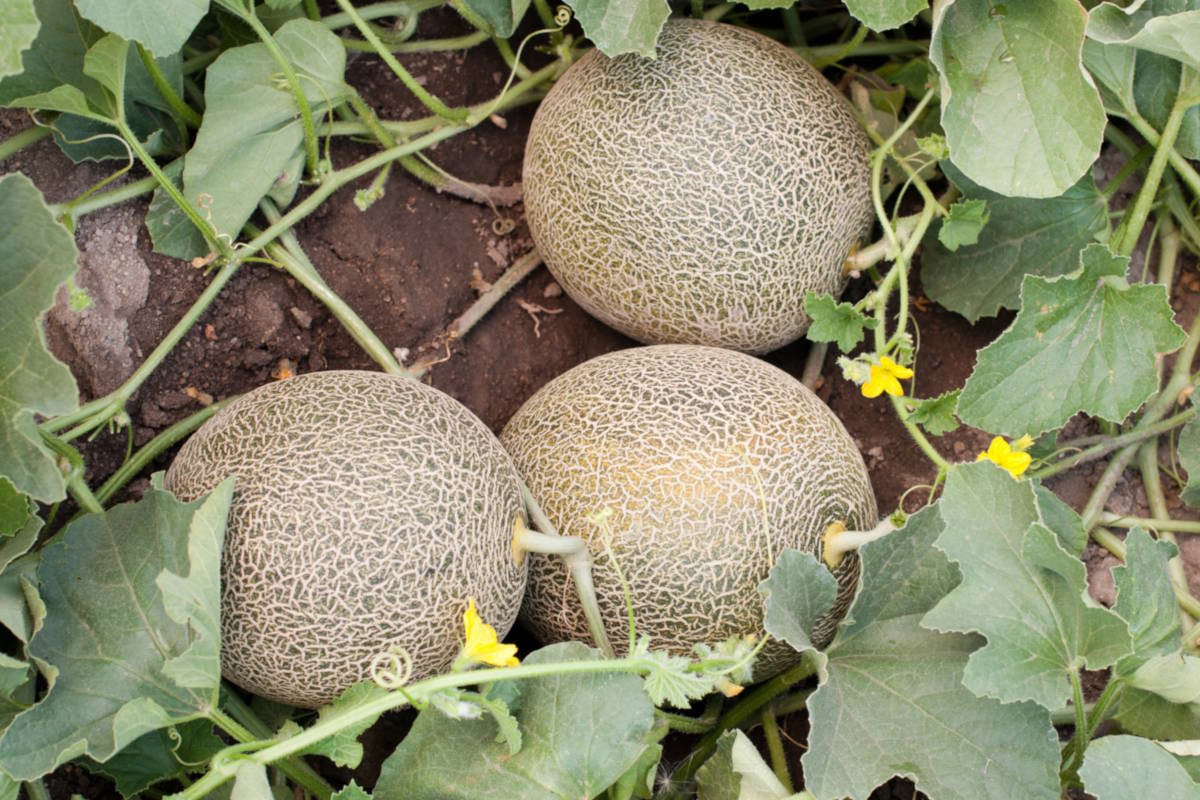
In Morocco, it has adapted perfectly – it can be found from the plains of the Gharb to the gardens of Marrakesh, and from the fields of Khouribga to the vegetable gardens of El Jadida. It is even grown in the Zagora region, which is surprising, even shocking, given its water requirements.
In fact, what you need to understand is that the melon is a demanding fruit. It loves the sun, of course, but it also loves water — lots of water. A melon is 90 per cent water by weight.
Growing melons in Morocco is a constant challenge, balancing the heat required for them to ripen with the irrigation needed to ensure their flesh remains juicy. In regions such as the Gharb or the Tadla, where groundwater and irrigation channels allow for intensive farming, melons thrive. Elsewhere, it is more complicated.
Perhaps that is why, over the centuries, Moroccan farmers have selected and adopted varieties suited to their local conditions – and why local markets now offer a diversity that I simply hadn’t noticed before.
Nutritionally speaking, melon is a summer champion: it’s hydrating, rich in vitamins A and C, a good source of potassium, and low in calories (fewer than 40 calories per 100 grams). But let’s be honest: we don’t eat melon for its nutritional value. We eat it because, when it’s good, it’s an explosion of sweetness, fragrance and freshness that makes you forget the 40-degree heat of the afternoon.
Souihla: the Moroccan Galia – the one that made me change my mind
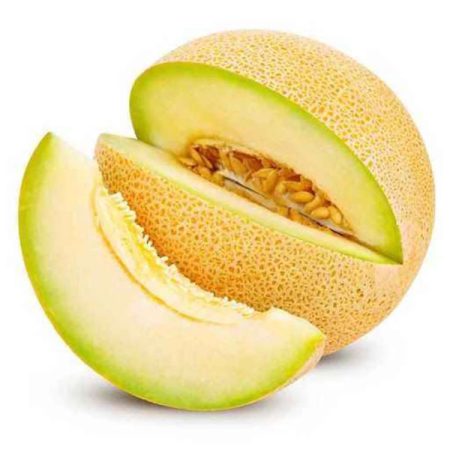
The first melon that made me realise I’d got it all wrong was the Souihla. Souihla (سويهلة) – that’s the local name for the Galia melon, the Israeli variety developed in the 1970s that has taken the world by storm. In Morocco, you can find it everywhere, from supermarkets to small roadside stalls. Its skin is pale yellow, almost golden, with a fine network of brown ‘mesh’ across the surface. The flesh? Pale green, tender, and incredibly sweet.
I remember the first Ѕоuіhlа I ever tasted ‘properly’ – that is to say, when it was fully ripe, not bought in June when it wouldn’t be ripe until July, and not cut too early in the morning whilst it hadn’t finished ‘breathing’ overnight. I’d waited until the skin had turned almost orange near the stalk, and the fragrance had become pronounced without being fermented. I cut it in half, scooped out the seeds with a spoon, and tasted it. Just like that. No salt, no ham, no lemon, no vinegar. Just the flesh.
It was delicious. No, it was ‘delightful’. A honeyed sweetness, a melt-in-the-mouth texture, a floral aftertaste that lingered on the palate. I thought to myself: ‘That’s it. That’s what I’ve been looking for all these years.’ Ever since, the Souihla has been my go-to melon. I highly recommend it if you have a sweet tooth, if you’re looking for a melon to eat on its own, as a dessert, or diced up for an impromptu fruit salad on the terrace at 7 pm when the sun starts to set.
Personal tip: Once ripe, Souihla doesn’t keep for very long. Two or three days at most in the fridge. But don’t put it in the fridge too soon – the cold stops it ripening. Buy it firm, leave it at room temperature on the worktop, and give it a sniff every morning. When the scent becomes almost too strong, that’s the moment. 1, 2, 3… slice it.
The Yellow Melon: the Canary melon, not the cantaloupe
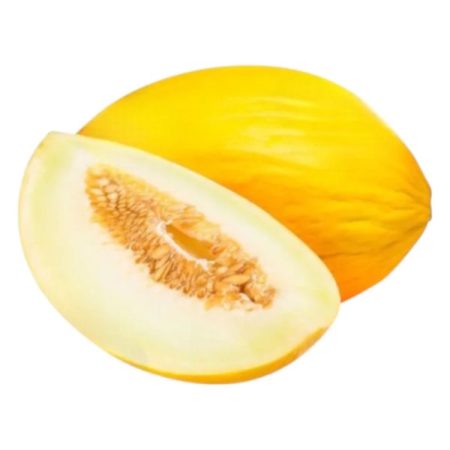
The yellow melon is the one I thought I knew. It’s actually the canary melon – let’s get that straight once and for all – and not the cantaloupe, as I foolishly believed for so long. The саnаrу has a bright yellow, almost fluorescent skin that is smooth and wrinkle-free. Its flesh, which is white or very pale cream in colour, is firm and juicy, and its flavour is sweet, slightly tangy, and less musky than that of the cantaloupe.
I mistook it for a cantaloupe for years, because both are sometimes labelled ‘yellow’ on the market stalls, and my intellectual laziness did the rest. It really is the worst idea you could possibly have – not to check. Canary melon is more refreshing than sweet, more like ‘fruit-flavoured water’ than an ‘explosion of honey’. It goes well with lemon, mint, and salads where you want freshness without heaviness.
In Morocco, I find it at the start and end of the season, when Souihla and Ananas are in short supply. Its firm flesh holds its shape well when diced, doesn’t fall apart, and stands up well to seasoning. I use it in mixed salads, glazed skewers, or even – dare I say it – in cold gazpacho blended with cucumber and a little green chilli. And if you manage to get hold of some cured ham, a melt-in-the-mouth slice of Canarian melon beneath a thin strip of ham is a real treat. Otherwise, locally produced dried duck breast works perfectly well.
What amuses me is that the Moroccans I know often refer to this one simply as ‘the yellow melon’, as if it were the standard variety. That may well be true visually – you can’t miss it on a market stall – but in terms of flavour, I find it lacks character compared to the Souihla or the Ananas. To each their own, of course. And everyone has their own misconceptions, too. I’ve sorted mine out.
Pineapple: the melon with an exotic scent, even when it comes from Khouribga
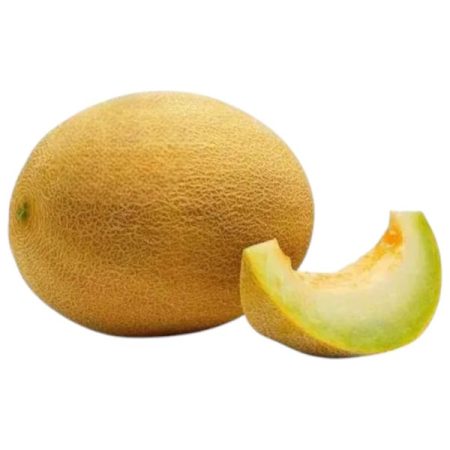
The pineapple melon is my latest discovery. And when I say ‘latest’, I mean ‘two years ago’. I’d seen it before – that oblong melon, with its orange, wrinkled skin and that scent… yes, just like pineapple. In fact, many Moroccans believe that this melon has been hуЬrіԁіѕеԁ wіth ріnеаррlе. I thought it was a marketing ploy, a name made up to boost sales. I was wrong.
The Ananas melon is an heirloom variety, probably originating in the Middle East, which has a distinctive flavour – sweet and tropical, with a slight tang that other melons lack. Its flesh is white to cream-coloured, less vibrant than the yellow variety, but more fragrant than the Souihla. And it is this tang that makes it so appealing: it doesn’t feel ‘heavy’ or leave you feeling stuffed. You can eat half a slice without feeling as though you’ve swallowed a jar of honey.
In Morocco, I find it mainly among direct producers – those who sell by the roadside between Casablanca and Marrakesh, or at the Dar Bouazza market when seasonal workers bring it in. It’s less standardised than Souihla, and less commonly found in supermarkets. And perhaps that’s why I love it: it has the flavour of the unexpected, of a chance encounter. You never really know what you’re going to get with a pineapple. Sometimes divine, sometimes a bit bland. That’s part of the fun.
I use it in fruit salads when I want to add a bit of complexity – with fresh mint from the garden, a splash of freshly squeezed orange juice, and a few pomegranate seeds that I’ve taken care to freeze when they’re in season. Or, quite simply, as frozen skewers for the children: cubes of melon and pineapple, cubes of watermelon, left in the freezer for two hours. Refreshing, fun, and it makes you forget it’s 40 degrees outside.
Sanchou: the ‘green’ one, Mzawka Marhoum, and my confusion from last year
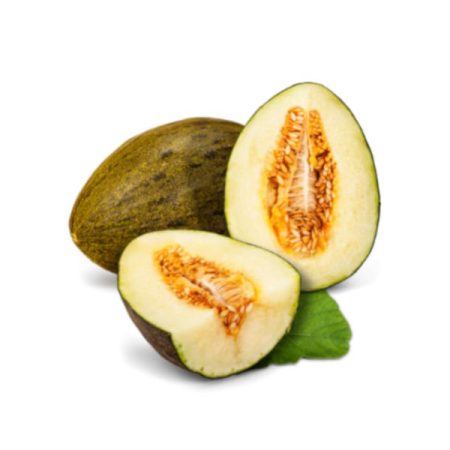
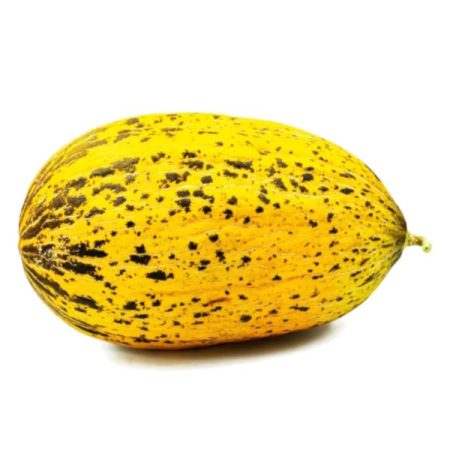
Here’s the melon that caused me the most trouble. The Sanchou green – or Mzawka Marhoum (مزوكة مرحوم) in Darija, which roughly means ‘the deceased watermelon’ or ‘thе рооr wаtеrmеlоn’, depending on local interpretations. It’s a green melon, with green flesh and green skin. It looks like a miniature watermelon, hence the name. And for months, I called it ‘the green melon’ as if it were a generic category.
That’s a mistake. It’s a Spanish variety, the ‘Sancho’, which has been adopted in Morocco and has acclimatised perfectly there. Its flesh is firm and crunchy, less sweet than other varieties – almost neutral, at times, when it isn’t quite ripe enough. But when it’s at its best, it has an incredible freshness and a lightness that sweet melons lack.
Sanchou is the melon used in salads. Full stop. I hardly ever eat it on its own – it lacks the sweetness for that, in my opinion. But diced, with cucumber, tomato, a little red onion, mint, olive oil and white wine vinegar (or lemon juice, if you can’t find vinegar), it makes the perfect summer salad. In Morocco, cucumber and tomato are a summer staple; Sanchou fits right in as if it had always been there.
And then there’s this story about ‘Marhoum’. I asked a market vendor about it one day. Why ‘the poor watermelon’? He laughed and shrugged. ‘Because it’s small, it’s not sweet, and it’s poor compared to the others.’ I found that endearing, almost sad. But the Sanchou isn’t poor – it’s just unassuming. It’s waiting for us to figure out what to do with it.
Cantaloupe: the real thing, the traditional variety, the one that comes from Italy
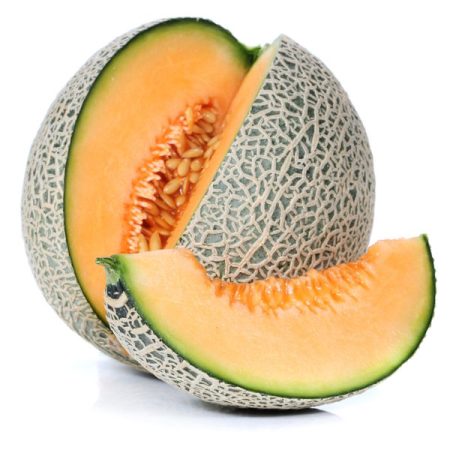
I’ve saved the cantaloupe for last, because it deserves some clarification. In Morocco, when people say ‘cantaloupe’, they often mean the yellow melon described above. But the real cantaloupe – the Cantalupo, named after the Italian village near Rome where it was grown for the popes – is a distinct variety. It is a melon that was brought to Rome from Armenia by monks in the 15th century. Its cultivation spread beyond Italy in the 16th century, particularly to France, in the Charentes region, where it became known as the ‘melon charentais’. It is a melon with orange flesh, yes, but with smooth or very slightly wrinkled skin, not ‘netted’ like the Souihla.
Can you find one in Morocco? It’s becoming increasingly rare. Modern varieties – Galia, Souihla and Ananas – have supplanted the old ones. But if you’re lucky, if you know a grower who still uses traditional seeds, you might come across a proper cantaloupe. And that’s quite an experience. The flesh is dense, almost firm; the sweetness is concentrated; the aroma is that of melons of yesteryear – the sort you read about in books, the sort you imagine in Renaissance paintings.
I’ve only ever tasted one, at a farmer friend’s house near Benslimane. He’d said to me, ‘Wait, I’ll fetch you *the* melon.’ I didn’t know what that was. I cut it open, tasted it, and realised that everything I’d eaten before had been a mere approximation. The cantaloupe is the melon that all the others are remembered for. It’s their common ancestor, their dream.
How to enjoy melon, or the art of doing nothing
I’m going to tell you something that’ll shock those who like to overcomplicate things: “the best way to eat a melon is simply to eat it”. Plain and simple. Cut in half, seeds removed, spoon in hand. Or in slices, if you prefer the texture of the edges. No salt, no sugar, no lemon, no port (that really is the worst idea anyone could come up with – melon with port – who on earth thought of that?).
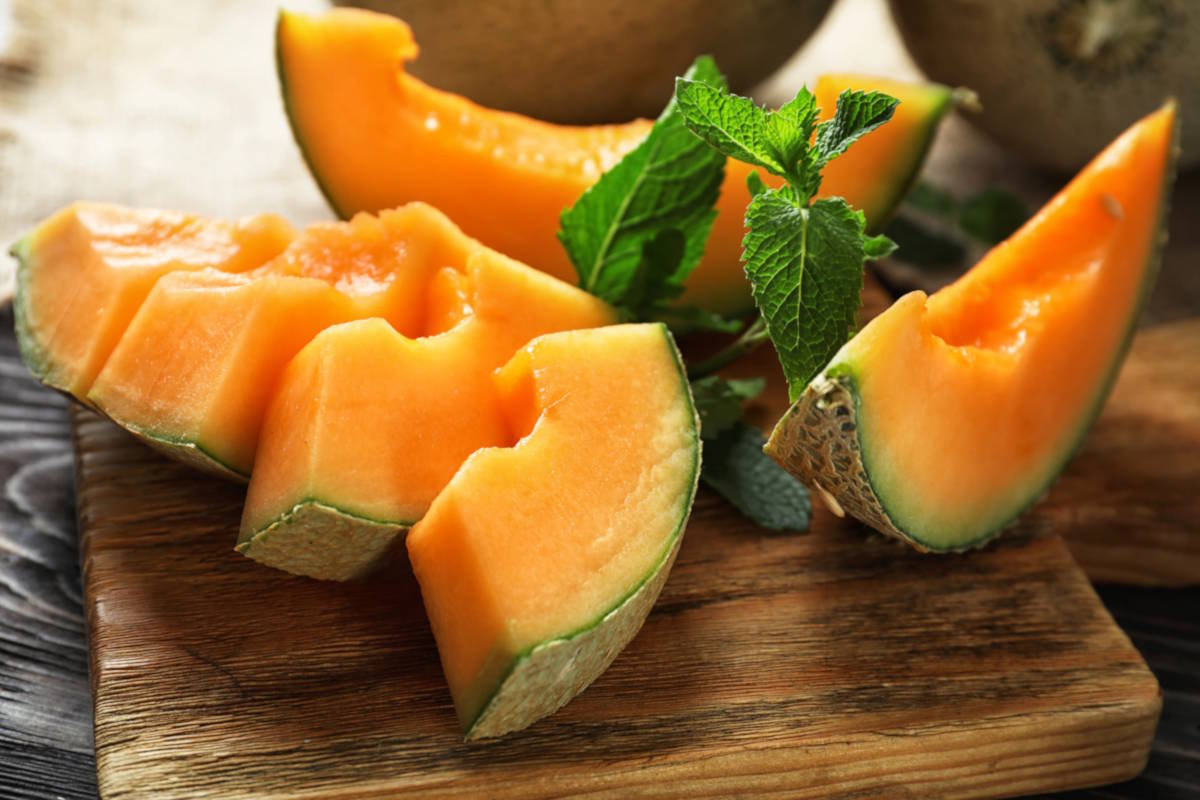
If you’re really keen to spice things up, a splash of lime juice on a Sanchou is perfectly acceptable. A pinch of fleur de sel on a very ripe Souihla is interesting – the salt brings out the sweetness, just like in Japanese desserts. But don’t turn the melon into a mess. It’s a fruit that’s already done all the work: the sun, the water, the time, the ripening. Your role is simply not to spoil it.
In Morocco, I eat my melon on the terrace at 6 pm, when the sun is still high but the heat is starting to ease off. I share it with anyone who happens to be passing by – neighbours, friends, the cat perched on the wall. It’s a fruit that symbolises sharing, conviviality and simplicity. You don’t eat melon on your own, in a corner, thinking about your taxes. You eat melon whilst looking out at the sea, listening to the sound of the waves, telling yourself that summer, despite everything, has its good points.
How much do melons cost in Morocco?
Prices vary widely; the same melon may be grown in Morocco or imported. What’s more, prices in supermarkets are not the same as those charged by roadside vendors.
To give you an idea, here are the average supermarket prices for the various types of melon available in Morocco:
Moroccan melons – Price per kilo
| Average price (Moroccan production) | Average price (import) | |
|---|---|---|
| Souihla | 5 | |
| Yellow Melon | 5,50 | 23 |
| Sanchou Melon (Green) | 28,50 | 49 |
| Sanchou Marhoum melon | 31 | |
| Pineapple Melon | 17 | |
| Cantaloupe melon | 21 | 40 |
It should be noted that at the end of July, Souihla melons were selling for between 1 and 2.3 dirhams at the Casablanca wholesale market.
And what about you – what’s your favourite melon?
I could go on and on. I could talk about grilled melon – yes, grilled, on the barbecue, with a bit of honey and thyme – an absurd yet delicious discovery. I could talk about the melon and mint sorbet, which you can even make without an ice cream maker by mashing the frozen flesh with a bit of sugar syrup. I could talk about the year I tried drying slices of melon in the sun, just like you do with figs or apricots, and ended up with… something sticky and, shall we say, questionable.
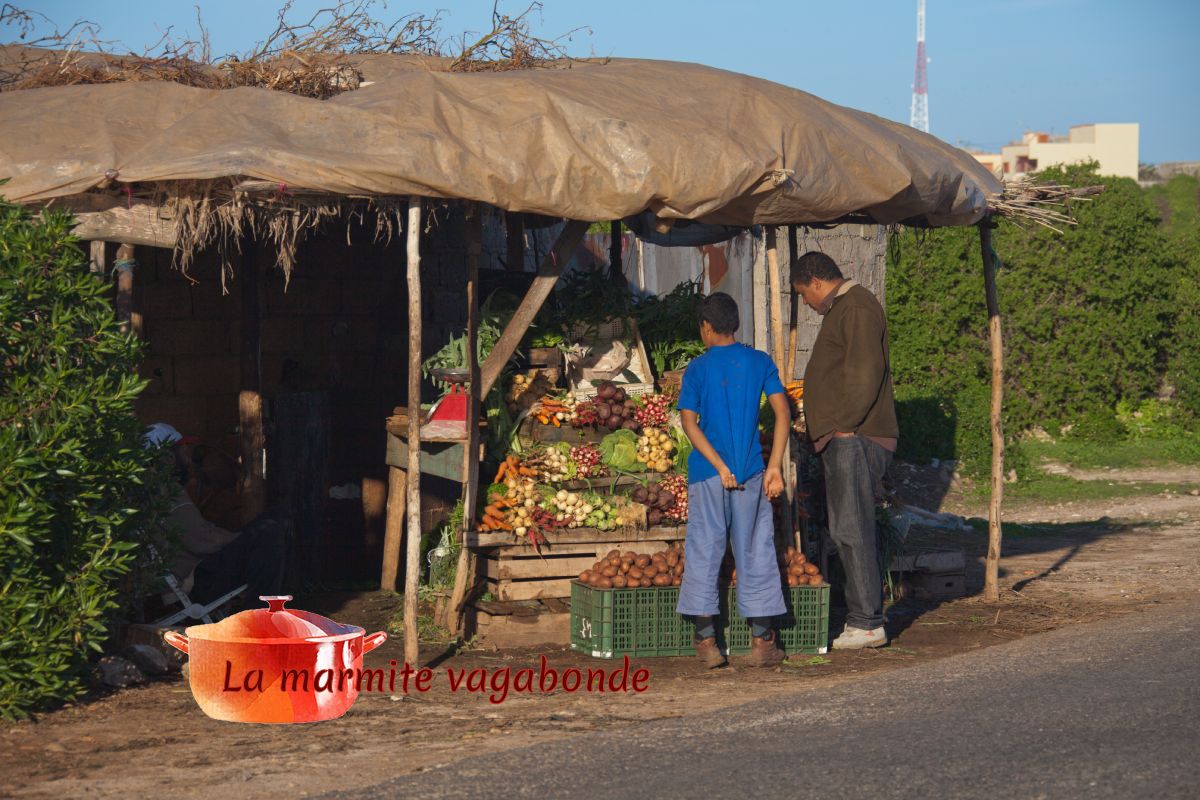
But I’ll leave it there. Because, at the end of the day, melon is all about encounters. About the market, the stall, the vendor who says to you, ‘hadak mzyan, kuli b saha’ (this one’s good, eat it and enjoy). Back at home, the knife cutting through the flesh, that first bite reminding you why you love summer.
So, next time you pass a stall selling melons in Morocco – in Dar Bouazza, in Marrakech, by the side of a country road – stop. Ask for the names. Smell them. Compare them. Taste them. And above all, don’t just call them all ‘melon’ any more. There’s the Souihla, the Yellow, the Pineapple, the Sanchou, the Cantaloupe. And perhaps others still, which I haven’t discovered yet. Nine years late, I’m still learning.
